
Finding hope in community
March 2026 edition of The Workbench
Like many of you, we’ve spent the first three months of this year coping with change. The pace has been relentless, and there are days when the distance between the world we’re trying to build and the one we wake up to feels overwhelming. Our work in community needs us to be anchored in hope. The muscular kind, the kind that takes effort and practice and sometimes stubbornness. I’ll be honest: there are stretches when that hope is hard to find on your own.
What I keep learning is that we find it in each other. In peers and partners doing similar work, asking similar questions, and sitting in the discomfort long enough to arrive at deeper answers. This is especially true when it comes to the harder questions we’re wrestling with at Gary. What is philanthropy’s purpose at this moment? How do we extend ourselves as allies to solve structural challenges? What does it mean to build something that is designed to end? You don’t answer those questions alone.
Last fall, we brought one such community together for ASSEMBLE100, our annual convening, this time focused on impermanence and sunset. We invited foundations, asset holders, and their advisors who are practicing or exploring what becomes possible when you stop organizing around perpetuity and start organizing around purpose, urgency, and transfer to community. What emerged was bigger than any single session. We left with better questions, stronger conviction, and a sense that this conversation deserved a broader invitation. Those insights have been compiled into a report we just released, Impermanence in Philanthropy: The Case For Giving Urgently, bringing together stories and practical approaches from Gary alongside Blue Meridian Partners, the Chorus Foundation, the Heron Foundation, and the Stupski Foundation. We are not alone in this work, and these organizations are charting their own courageous paths.
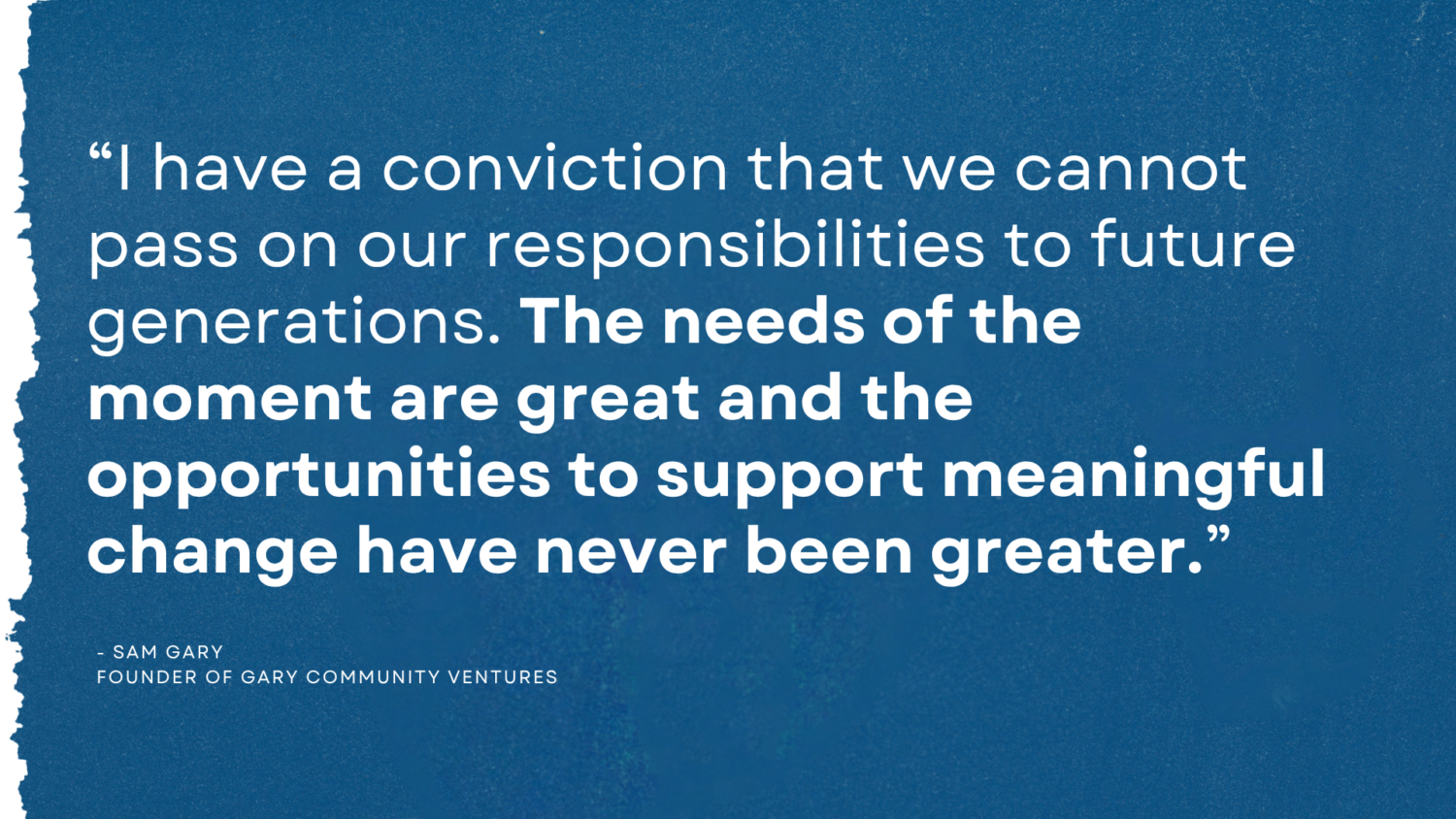
At Gary, we believe that knowing our time is limited is what gives our work its clarity. Not spending down, but transforming. Every relationship we’ve built, every system we’ve sought to improve, is meant to become part of something more durable than we could ever be as an institution. If this work resonates, or if you’re exploring similar questions, reach out to Emily Williams on our team. We’d love to continue the conversation.
On The Workbench
- Our team is exploring some early experiments around consolidating down-payment assistance programs and creating a homeownership navigator. We’d love to hear from folks who may have ideas, thoughts, or want to partner. Reach out to my colleague James Lukens.
- With the Aspen Institute Financial Security Program, we released a report to help impact investors and policymakers establish programs to help renters save and build wealth. We’ll be sharing this report at a number of upcoming convenings and we want to help other communities implement tenant equity programs. Please reach out to my colleague Catherine Toner to set up a conversation.
- We are excited to see the launch of the Ignite Futures Fund, a five-year pilot exploring the transformative potential of early wealth-building accounts, by seeding $20K investment accounts for each young person in the pilot. We know others have been working on early wealth building and baby bonds — please contact Jill Hawley if you have ideas and insights to share.
- We’re thrilled to continue partnering with the housing ecosystem in Colorado as we make progress one step at a time on a range of challenges, including land use — and the passage of the HOME Act is a compelling next step.
- Our Gary Advocacy team is committed to working with our partners and state legislators to protect public funding for affordable housing. This op-ed by Luke Teater, a leading housing economist, acknowledges the hard work ahead as legislators balance the budget while encouraging them to meet the state’s affordable housing needs.
- We’re partnering with other foundations around the country on a Multilingual by Design initiative that brings together K-8 education nonprofits and AI builders to create AI-enabled tools for multilingual learners. The national RFP is live and closes on April 3. Check it out here!
- In an effort to raise awareness on the challenges of child care affordability, our narrative and storytelling cohort is actively collecting powerful child care stories; please share this form widely and check out this event clip.
- Partners at Children’s Hospital and Healthier Colorado launched a campaign to engage policymakers in youth mental health; visit their site here.
- Our partner MyFriendBen just expanded to Washington State (their 6th state!). Early results from an Urban Institute study show some tremendous results: 64% learned about a new benefit for the first time, and 91% plan to apply for one in the next 12 weeks.
- Lastly, on the topic of public benefits, we are looking for someone to lead a transformational new public-private partnership in reimagining the benefit system in Colorado. Here’s the job description. Send us ideas, please 🙂
~ Santhosh
Welcome to the Workbench — a monthly peek behind the curtain at Gary. The way we work involves tinkering, making mistakes, changing, growing, and learning from all of it. We’re often in draft mode: testing ideas, iterating on what’s working, and letting go of what isn’t. This newsletter is our way of sharing that journey with you — not the polished final product, but the messy, exciting work-in-progress itself. Because if we’re serious about making Colorado the best place to raise kids, we want to build it with you.
Send me updates every month
Newsletter Sign-up
Share this post
Related Articles
The art of letting go
February 2026 edition of The Workbench
Colorado is leveraging its tax code to reduce child poverty
Federal benefits cuts are looming – here’s how Colorado is trying to protect families with children
Building Wealth For Renters
This report documents how the Colorado TEV, which launched in January 2026 as Colorado Renter Rewards, was designed, the policy and financing tools that made it possible.
CO Has The Lowest Child Poverty Rate In The Country
The state’s refundable tax credits are helping families meet basic needs and build financial resilience