Proposition 123: Creating Housing Hardworking Coloradans Can Afford
What Could Be
Hardworking Coloradans could live in a state where owning a home is affordable.
Should Be
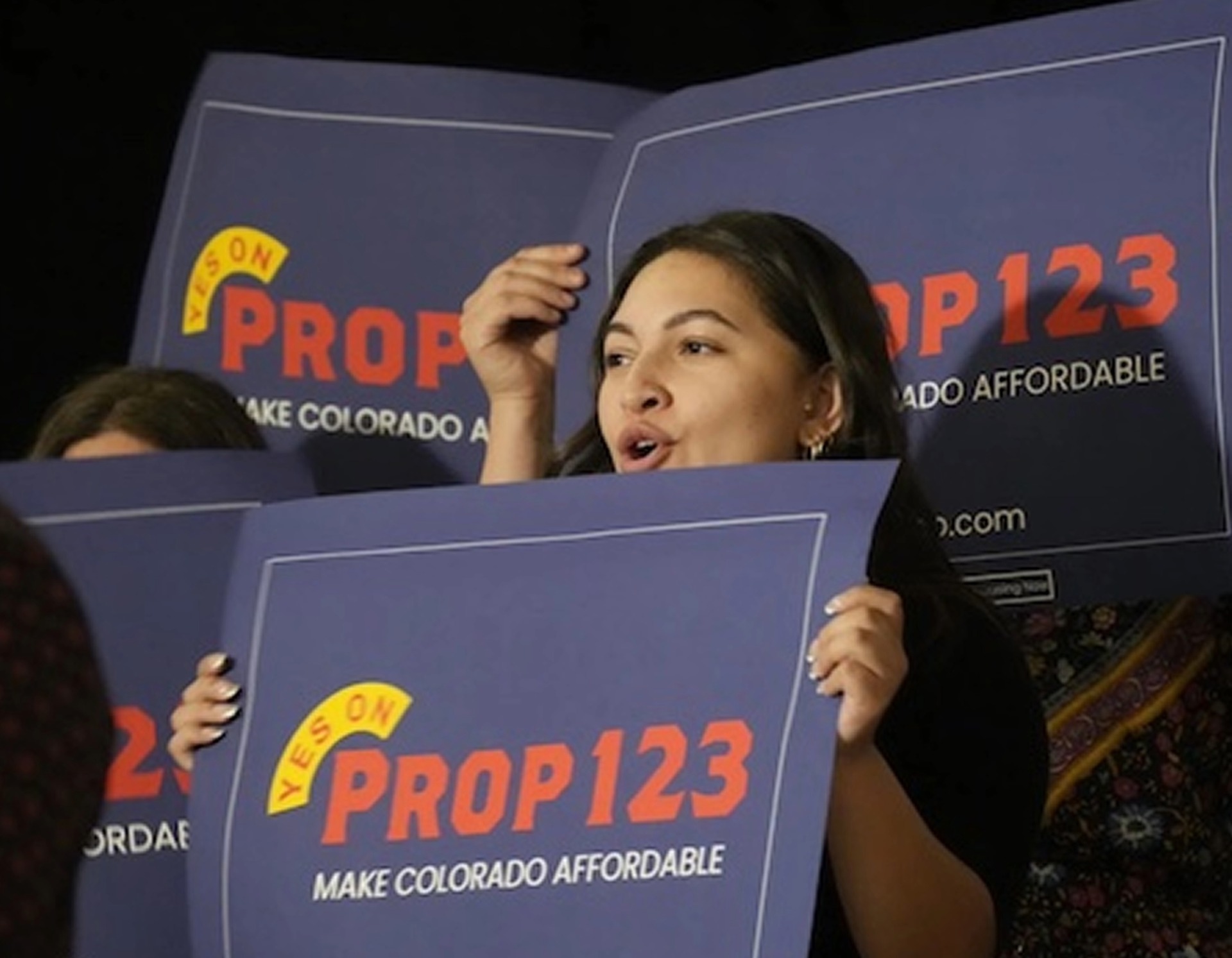
Voters approved Proposition 123, a statewide policy that provides $300 million in state income tax revenue to increase the stock of affordable housing across Colorado.

As of 2022, nearly 50% of Coloradans spent more than 30% of their income on housing, making it harder for families to find stable housing and build long-term financial stability.
That same year, team members from Gary Advocacy, our policy arm, led a successful community effort to pass Proposition 123, the state’s first comprehensive affordable housing ballot measure. The proposition dedicates roughly $300 million annually from state tax revenues to fund homelessness services, affordable housing projects and homeownership opportunities. Thanks to the measure’s popularity with housing developers, state and local lawmakers, as well as housing advocates, we’ve seen:
- Local municipalities representing more than 90% of Coloradans opting to participate in the program, which requires those municipalities to measurably increase their affordable housing stock each year.
- More than 175 housing development projects funded by Proposition 123 as of 2025, creating or preserving 3,294 affordable units as of early 2025.
- A first-in-the-nation Tenant Equity Vehicle that pays renters any profits created from the buildings they live in.
The Colorado Housing and Finance Authority and Department of Local Affairs were strategically tapped to manage the program, as both are well positioned to handle the complex financing and local coordination efforts Proposition 123 requires, and have moved nearly $1 billion into the housing market in just three years. The flexibility built into the law also ensures it can continue to create affordable housing while adjusting to the state’s budgetary needs long after Gary sunsets as an organization.
“I’m grateful the state recognizes we have a (housing) problem, and we have to have resources to be able to begin to fix it. But those resources are only as good as our ability to distribute and implement them, and Proposition 123 gives us the tools we need to do that.”
Anna Stout Former Mayor and Current City Councilmember of Grand Junction
Colorado’s Housing Crisis Reaches a Tipping Point
Colorado’s housing market reached a crisis point by 2022. Over the last decade, home prices had doubled, while wages remained largely stagnant. Median household income had risen only 25% since 2000, while rents increased by 81%. This gap left more than half of renters — 50.9% — “housing burdened,” paying more than 30% of their income toward housing. For renters earning under $50,000, that figure climbed to 83%. Supply lagged dramatically: Colorado built 40% fewer units from 2010–2020 than in the previous decade. Without intervention, projections showed the median single-family home could approach $1.7 million by 2032, requiring a household annual income of $372,000 to purchase.
The public recognized the urgency. By mid-2022, 88% of Coloradans said housing costs were a serious problem, and one-third worried about losing their homes. Polling confirmed it was one of the top issues for voters, with one in five saying it was the most important issue facing the state.
Beyond numbers, the human impact was stark. Teachers, firefighters and nurses increasingly could not afford to live near where they worked, undermining community resilience. Small business owners told us they were losing employees who moved out of state due to unaffordable housing. Habitat for Humanity was even more specific, sharing stories of essential workers, like ICU phlebotomists, who were unable to buy homes despite steady, well-paying jobs.
Building More Affordable Housing — Without Raising Taxes
Working with experts in policy, impact investing and housing development, Gary’s Policy & Advocacy team sought to develop a comprehensive, statewide policy that could create a sustainable fund that would be dedicated to increasing Colorado’s stock of housing over time, giving control to local governments to both opt into and apply for funding to create the housing stock that best suited their communities.
The result was a citizen-initiated state statute that came to be known as Proposition 123, passed by voters in November 2022. At its heart, Proposition 123 established a sustainable funding stream of approximately $300 million annually (0.1% of taxable state income) for affordable housing — without raising taxes. Instead, it dedicated a portion of existing Taxpayer Bill of Rights (TABOR) surplus revenue. Even in lean years, the measure included safeguards: lawmakers could temporarily reduce allocations, protecting the general fund.
The measure balanced statewide standards with local control. To access funds, municipalities had to commit to increasing affordable housing by 3% annually and adopt a prioritized permitting process to cut red tape. However, local governments retained the authority to design processes that fit their communities, ensuring flexibility for urban and rural areas alike.
Going into the election, the Gary team had strong polling guidance that this was an issue Coloradans cared deeply about, with 58% of likely voters voicing support for Proposition 123 in a Keating Research poll. Following the successful passage of the proposition, exit polling highlighted the broad-based, bipartisan support for the effort. Voters shared admiration for the measure’s fiscally responsible approach, the way it utilized existing state resources and the tools it provided to local communities to solve their individual and unique housing challenges in tailored ways.
A Policy With Innovative, Market-Based Approaches
Proposition 123 was not designed to function like a traditional government housing subsidy. It embraced market-based tools to expand supply and stabilize costs:
- Land Banking: Funds could secure land for future development, preventing speculative investors from driving up costs.
- Affordable Housing Equity and Concessionary Debt: The Colorado Housing and Finance Authority (CHFA), a quasi-governmental body, was tasked with issuing equity and low-interest loans. Unlike Wall Street, CHFA accepted below-market returns, allowing lower rents while reinvesting proceeds into future projects.
- Tenant Equity Vehicle (TEV): One of Proposition 123’s most innovative features, the TEV allowed renters in subsidized developments to accumulate equity over time. As property values increase or rents return revenue, tenants receive a share to use as a down payment on a future home or other wealth-building activities. This program created a pathway from renting to ownership, bridging the wealth gap for working families.
Together, these tools represented a shift in approaches and sentiment towards affordable housing, treating it less like a social good and more like a sound investment in stability, workforce resilience and economic mobility for all Coloradans.
Shifting the “Affordable Housing” Narrative
Historically, affordable housing debates in Colorado carried a certain stigma. Terms like “Section 8 housing” were weaponized, with fears that affordable projects would drag down property values. Proposition 123’s campaign deliberately reframed the conversation. Messaging pivoted to “housing hardworking Coloradans can afford,” highlighting essential workers as the primary beneficiaries.
Storytelling was central. Campaign materials featured diverse voices:
- Jackie Millet, a Republican mayor from Lone Tree, who endorsed the measure saying, “we’ve reached a tipping point and we cannot continue to wait on the sidelines and hope that something happens.”
- Jordan McDonald, a teacher and basketball coach from Aurora, who lamented he was no longer able to live where he worked.
- Jed Reddin, a Grand Junction firefighter, who stressed the importance of housing solutions that could deliver workforce and middle-income housing.
Message testing and measurable digital campaigns confirmed this approach worked. Phrases like “hardworking Coloradans” polled strongest across demographics, particularly among women over 50 and conservative renters. Message testing also showed that narratives focusing on community preservation — “we’re losing the Colorado we love” — resonated deeply with younger voters and independents. A story-based ad that highlighted desperate housing searches posted on Facebook from one Colorado mountain community drove twice as much engagement as any other message produced during the campaign. And a grassroots storytelling effort with local influencers from all walks of life helped deepen the campaign’s connection with targeted local communities.
By avoiding jargon and instead emphasizing people — teachers, nurses, firefighters and small business owners — the campaign fostered broad empathy. This human-centered frame helped shift Proposition 123 from a policy debate into a story about protecting Colorado’s future in meaningful and measurable ways.
Responding to Unprecedented Budgetary Circumstances in 2025
Two years after its implementation, Proposition 123 had funded more than 175 housing development projects, which meant the creation or preservation of 3,294 permanently affordable units across Colorado, delivering on its promise to voters to bring more housing Coloradans could afford online efficiently and effectively.
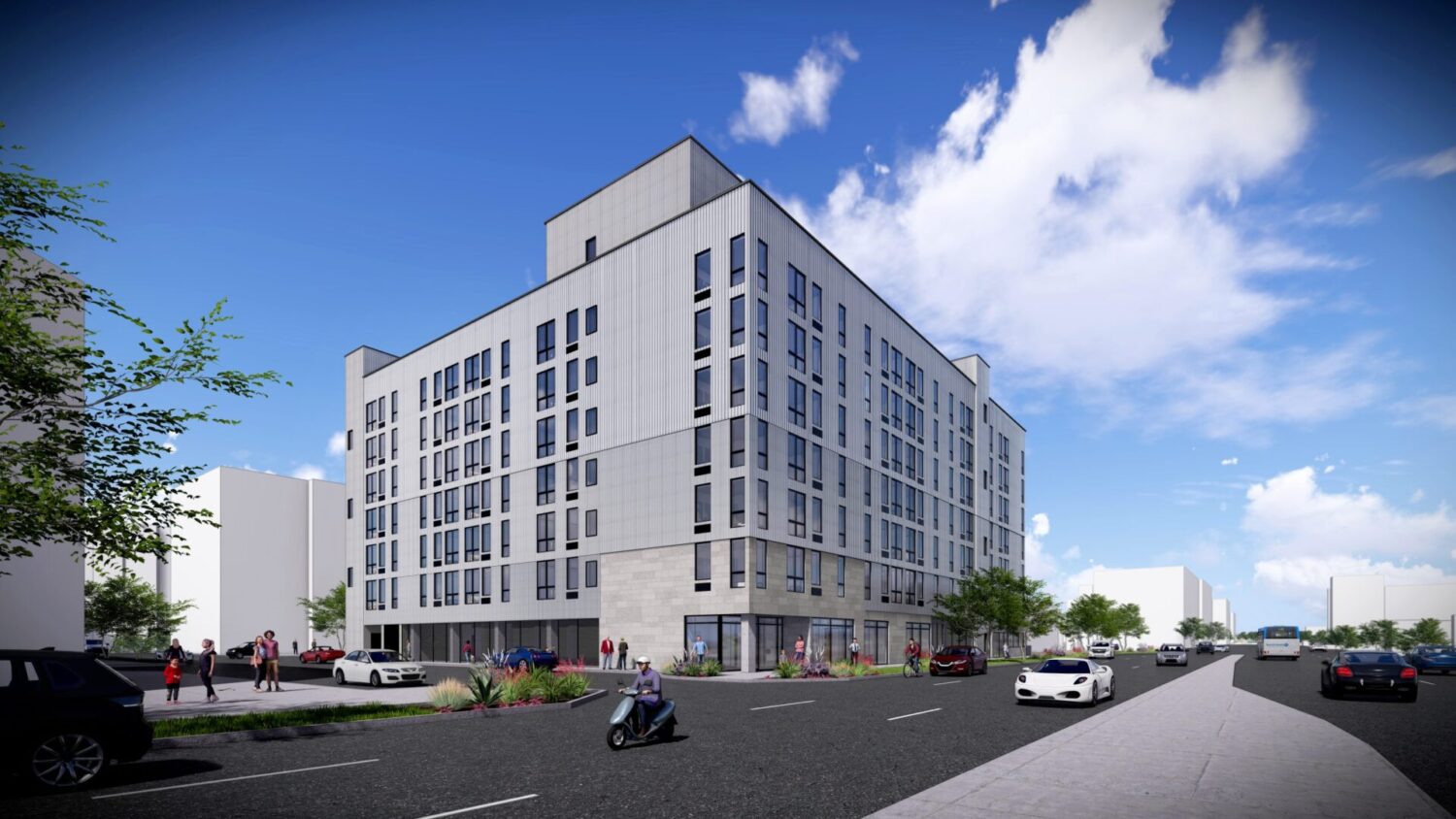
A rendering of The Irving at Mile High Vista, a 102-unit affordable housing complex that will be built by late 2025 in Denver’s West Colfax neighborhood with the support of Proposition 123 funds.
However, the passage of H.R. 1 at the federal level created a budget deficit for Colorado of more than $1 billion. And in a special 2025 legislative session, a recommendation was made to temporarily use a portion of Prop 123 funds to cover budget gaps created and other portions as a tool to further leverage federal housing dollars.
Due to TABOR, Colorado is deeply constrained in its ability to invest in the programs that make our state more affordable. Proposition 123 addresses that challenge head-on, utilizing existing state resources to address housing affordability while also providing the legislature with the discretion to pause funding for the measure if dire state budget issues arise. While we hoped to avoid implementing this provision as early as 2025, we believe this one-year reduction in funding serves as a responsible fiscal approach, given the constraints our state was facing.
Our team remains committed to supporting and defending Proposition 123, and working with partners on a host of solutions to do so moving forward.
Housing And Homeownership
Our work to transform systems and build family wealth often collide when it comes to housing and homeownership. By addressing both, we can create opportunities for families to thrive at various stages of life.